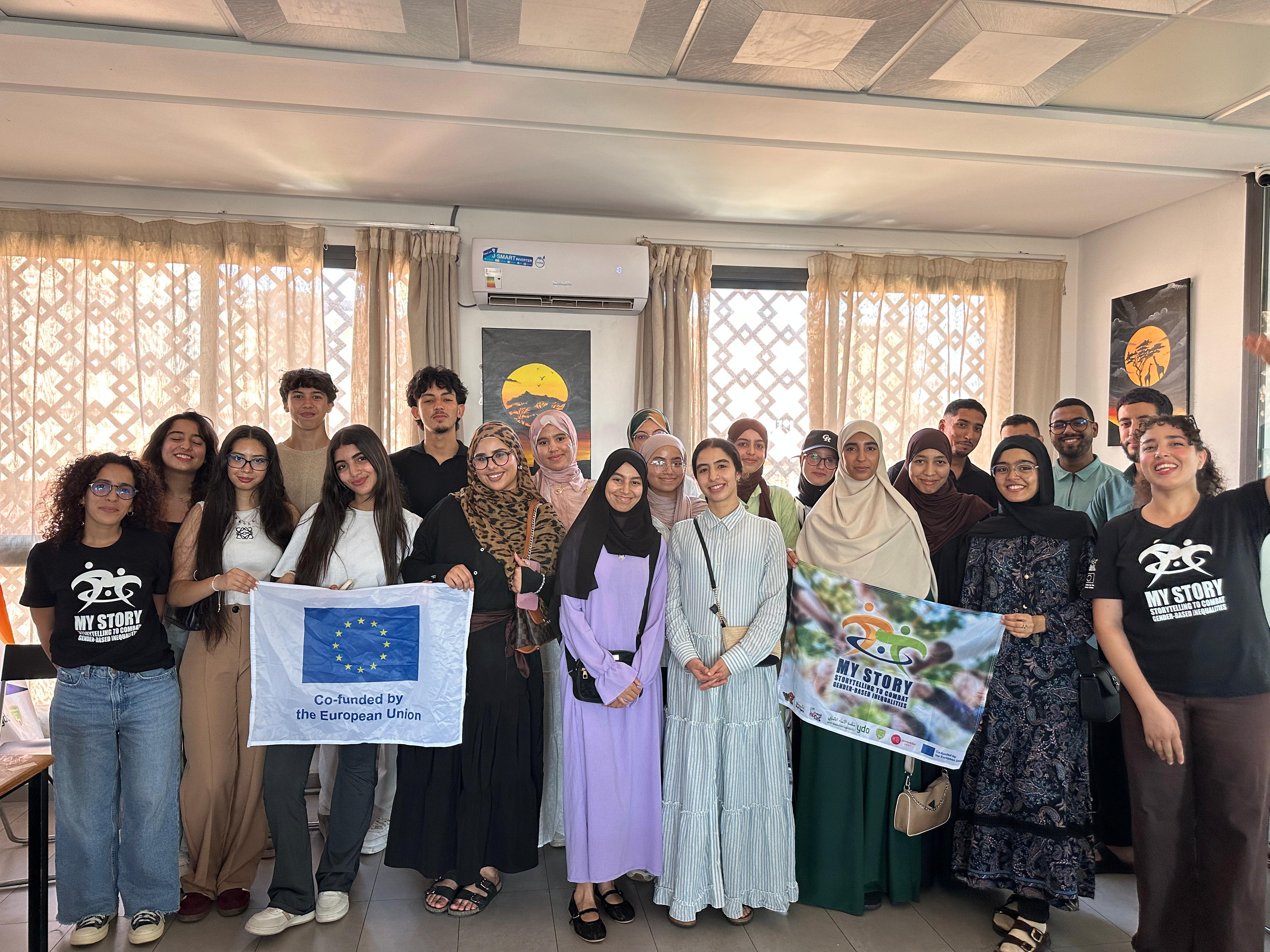
In Tameslouht and Marrakech, 65 young people examined the barriers faced by girls and young women and proposed practical solutions to promote equality.
Between 6 and 21 June 2026, Euro-Med EVE Maroc organized six participatory focus groups as part of the international project MY STORY – Storytelling to Combat Gender-Based Inequalities in European and MEDA Countries. Bringing together young people from Marrakech, Tameslouht, and several surrounding rural communities, the workshops created an opportunity to examine gender inequalities through the experiences, perceptions, and realities observed by participants.
MY STORY is an Erasmus+ capacity-building project implemented by a consortium of organizations from Serbia, Italy, Portugal, Morocco, Lebanon, and Egypt. It aims to strengthen the capacities of partner organizations, youth workers, peer educators, and young people to combat gender-based discrimination and violence. The project uses research, non-formal education, personal stories, and awareness-raising activities to achieve these objectives.
Research Based on Complementary Sources
The workshops formed part of a national research process combining three complementary approaches: a desk analysis of gender equality in Morocco, an online survey targeting girls and young women, and focus groups involving young people.
The survey, distributed in Arabic and Darija between January and June 2026, collected 234 anonymous responses from participants aged between 15 and 30. The focus groups were then used to explore the quantitative findings in greater depth, identify the causes of the challenges identified, and collect recommendations directly from young people.
A total of 65 people aged between 17 and 28 participated in the six workshops, including 45 young women and 20 young men. This diversity made it possible to compare the perspectives of young people living in urban, peri-urban, and rural areas, as well as those from communities with fewer opportunities.
Workshops Organized Close to Young People and Their Communities
The first focus group took place on 6 June at Dar Chabab in Tameslouht. Dedicated to decision-making and civic participation, the session ensured that the perspectives of rural young people were included in the research.
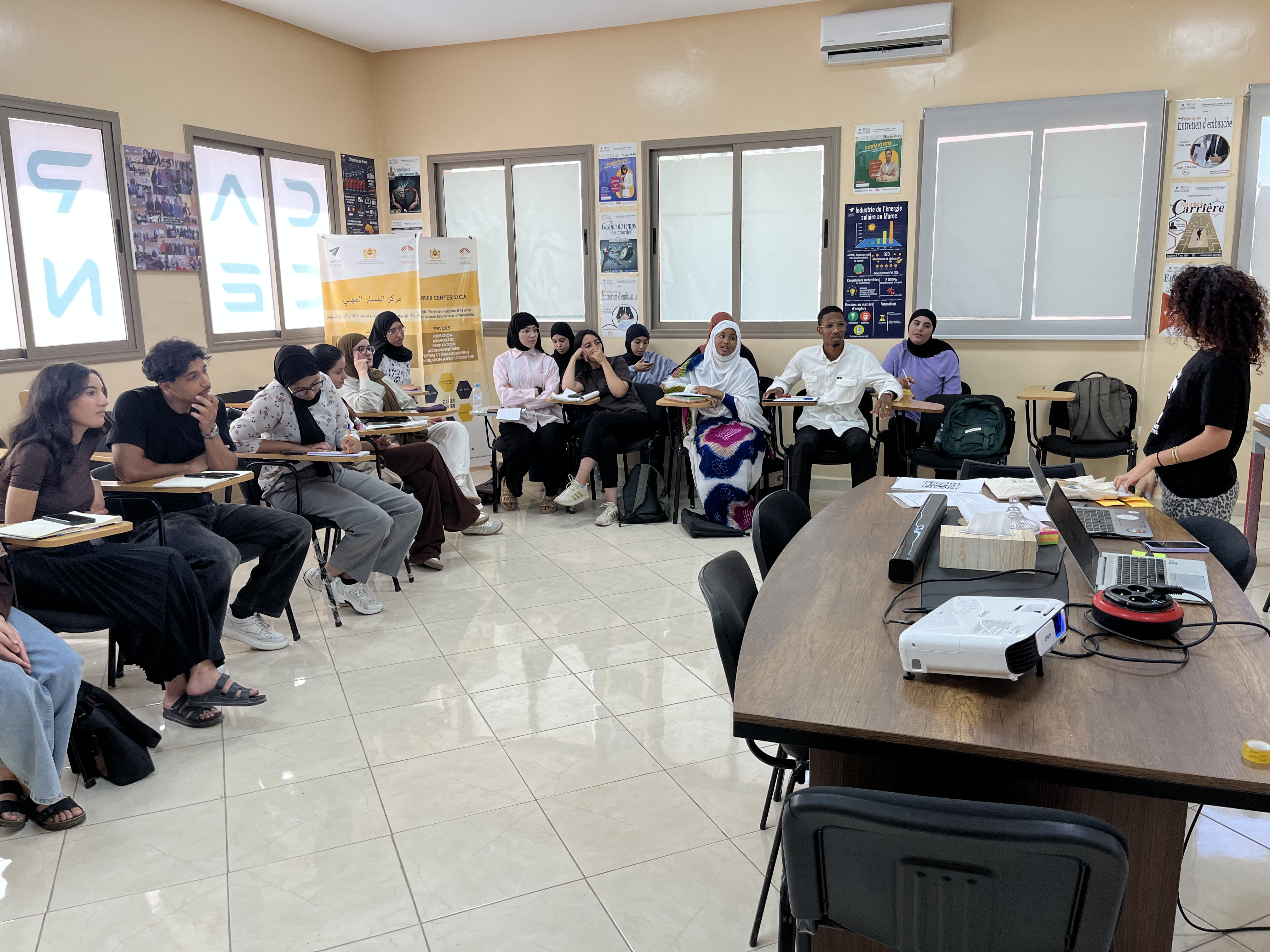
Four additional focus groups were held on 13 and 14 June at the Career Center of Cadi Ayyad University in Marrakech. Participants discussed gender-based violence and safety, education and employment, and access to sport for girls and young women.
The final workshop was organized on 21 June at Syllabus Coworking Space in Marrakech. It focused on the representation of women in the media and the influence of gender stereotypes on everyday life.
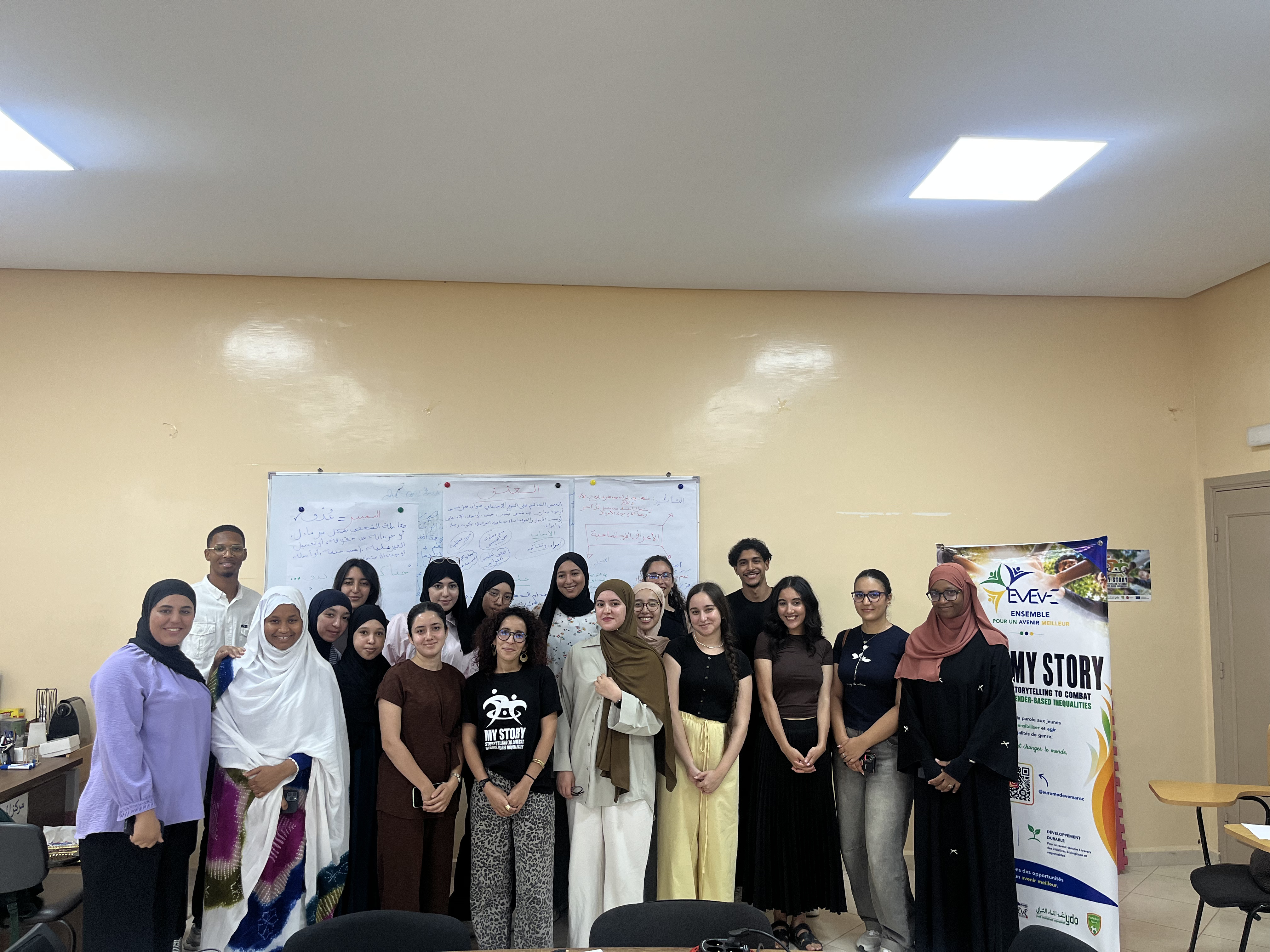
The sessions followed a participatory methodology. Young people took part in group discussions, problem-mapping exercises, flipchart activities, and plenary presentations. They were encouraged to identify specific challenges, their root causes, the actors responsible for addressing them, and possible solutions.
Inequalities Affecting Several Areas of Life
The discussions showed that the barriers faced by girls and young women are not limited to a single sector.
In education, participants highlighted financial difficulties, distance from educational institutions, lack of transportation, family responsibilities, and certain social expectations. Young women from rural backgrounds also described the difficulties they may encounter when leaving their villages to study in Marrakech.
In relation to employment, discussions highlighted the lack of career guidance, limited access to practical training, and the continued influence of perceptions that restrict women’s professional choices. In the survey, 51.6% of respondents believed that women did not have the same employment and professional development opportunities as men.
Access to sport also remains unequal. Participants identified the lack of safe spaces, transportation difficulties, the cost of activities, social judgment, and limited family support. Almost half of the survey respondents believed that young women did not have the same opportunities to participate in sport in their communities.
Violence and Stereotypes at the Heart of Participants’ Concerns
Gender-based violence emerged as the most urgent priority. According to the survey, 80.4% of respondents considered violence, harassment, and psychological or physical pressure to be serious problems in their communities.
However, only 31.6% said they clearly knew where to seek help. The focus groups confirmed the impact of fear, silence, stigma, and limited trust in institutional support and reporting mechanisms.
Gender stereotypes represent another cross-cutting barrier. More than three-quarters of respondents believed that stereotypes strongly influence the opportunities available to young women. Participants explained that these ideas are learned from an early age through families, schools, communities, the media, and social media.
Such stereotypes may affect girls’ ability to continue their education, access employment, participate in sport, move independently, speak publicly, and engage in local civic life.
Young People Ready to Contribute to Solutions
The workshops did more than identify challenges. They also demonstrated young people’s willingness to contribute to practical solutions.
Their proposals included creating mentorship programs for rural girls, improving access to information about scholarships and training opportunities, developing appropriate sport facilities, and organizing training in communication, leadership, teamwork, and public speaking.
Participants also called for regular consultation spaces bringing together young people, civil society organizations, and local institutions. They want their participation to be recognized and their ideas to receive meaningful institutional follow-up.
In relation to gender-based violence, they recommended making support services more visible, clarifying reporting procedures, strengthening psychological and social assistance, and organizing prevention activities involving young people, families, and communities.
Storytelling as a Tool for Change
The results of this research will guide the next phases of the MY STORY project. They will contribute to the development of the project’s Guidelines, non-formal education methodologies, virtual gallery, and future awareness-raising campaign.
Storytelling, visual narratives, testimonies, and the PhotoVoice methodology will play a central role. By giving a human dimension to research data and highlighting diverse experiences, these tools can help challenge stereotypes and present girls and women as active contributors to education, sport, employment, public life, and community development.
The research conducted in Morocco shows that young people are not only aware of gender inequalities. They also have ideas, experiences, and a genuine willingness to take action. The next step will be to transform this engagement into educational tools, campaigns, and practical activities, with particular attention given to youth participation, rural inclusion, and the creation of safe spaces.